

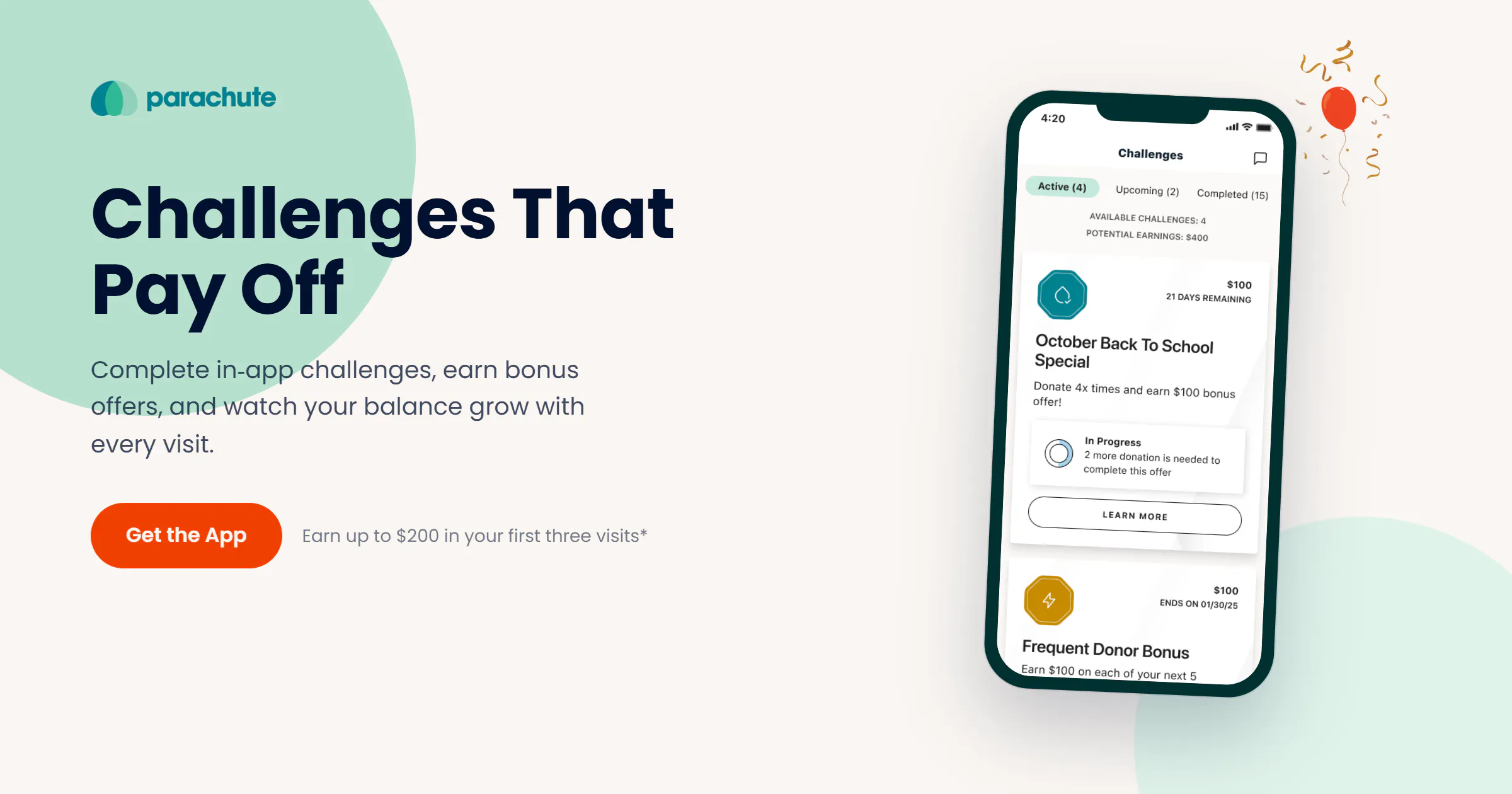
How to Earn More With Parachute Challenges
You're already donating. Here's how to make sure you're getting paid for all of it.
Parachute pays you every time you donate. But there's a layer most donors don't fully use: Challenges. These are time-limited earning opportunities built into the app that let you stack extra payments on top of your regular donation compensation — just by showing up consistently.
What Are Challenges?
Challenges are goals you opt into through the Parachute app. They're typically tied to a donation frequency target over a set time window — something like donating a certain number of times within a cycle. When you hit the target, you unlock a bonus on top of your standard payment.
Think of it like a punch card, but the reward is cash and it resets on a regular schedule.
How Levels Factor In
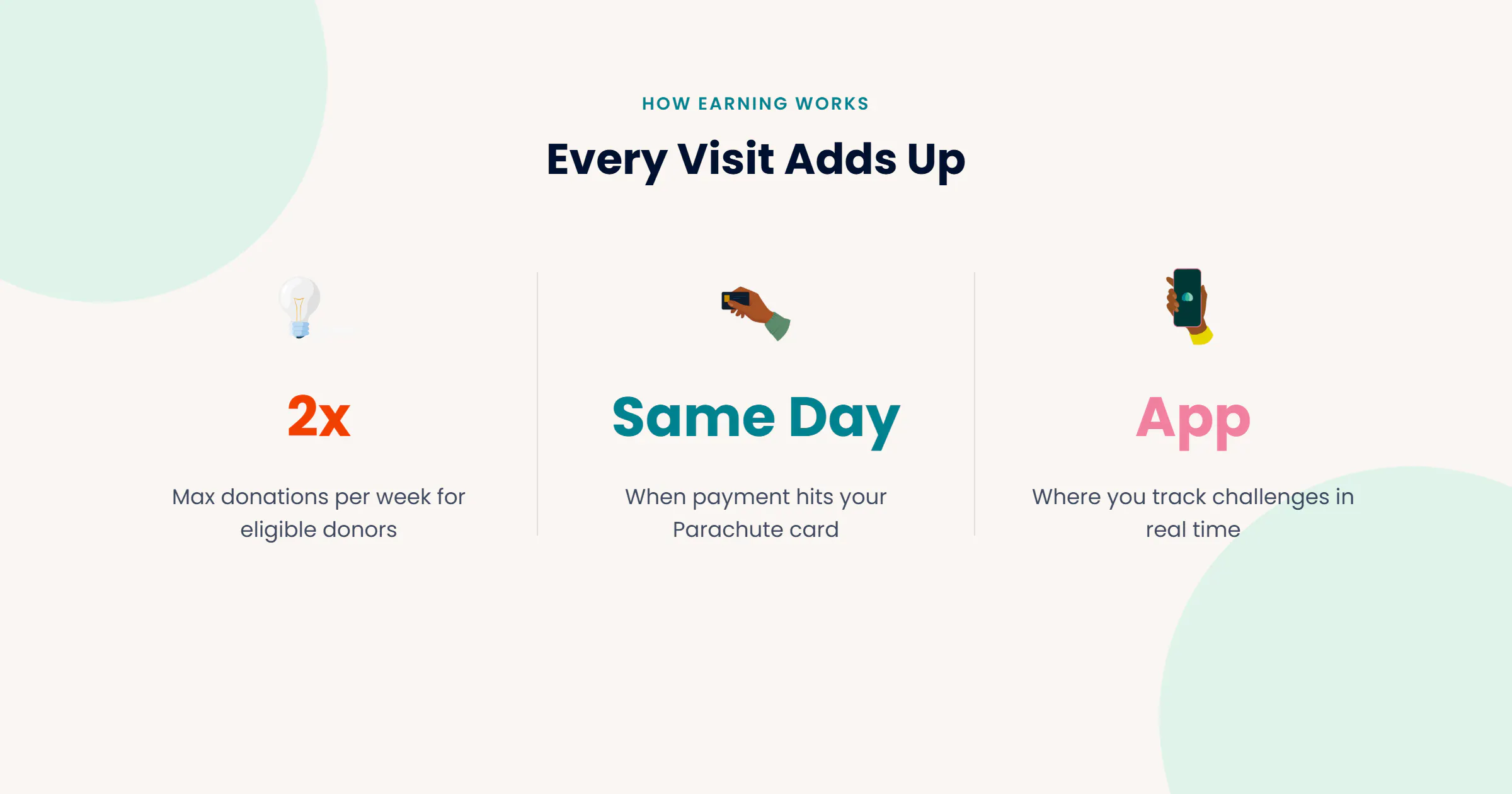
Challenges work alongside Parachute's Levels system. The more consistently you donate, the higher your Level — and higher Levels come with better base compensation and access to larger Challenge bonuses. Donors who combine regular donation habits with active Challenge participation tend to see meaningfully more on their card each month.
New to Levels? Check out our breakdown of how Levels and Cycles work — it's worth understanding before your next donation visit.

It Adds Up Faster Than You'd Expect
Donors who build donation into their weekly routine — two visits, consistent timing, Challenges active — often describe the earnings as feeling like a second income stream rather than a one-off cash boost. The math compounds when you treat it like a habit instead of a whenever thing.
The Parachute app is built to make that easy. Everything you need to track — Challenges, Levels, upcoming visits, your card balance — is in one place.
Find A Center Near You
Check out our center locations to see if you could be eligible to donate plasma!
Book Now
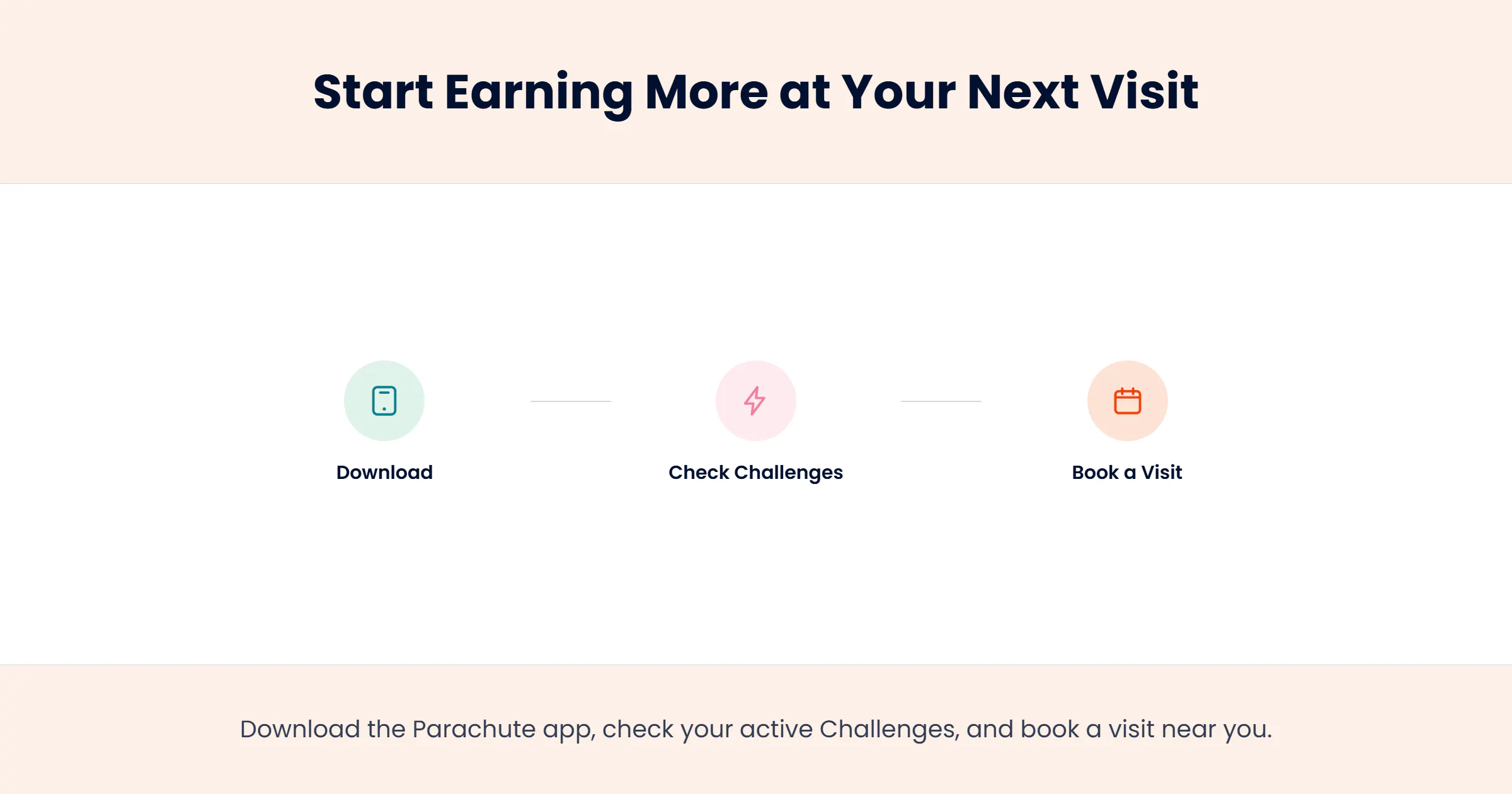
Download our app today to get started
Have Questions?
Consult our FAQs
This article is for informational purposes only. It is not, nor is it intended to be, a substitute for professional medical advice, diagnosis, or treatment and should never be relied upon for specific medical advice.